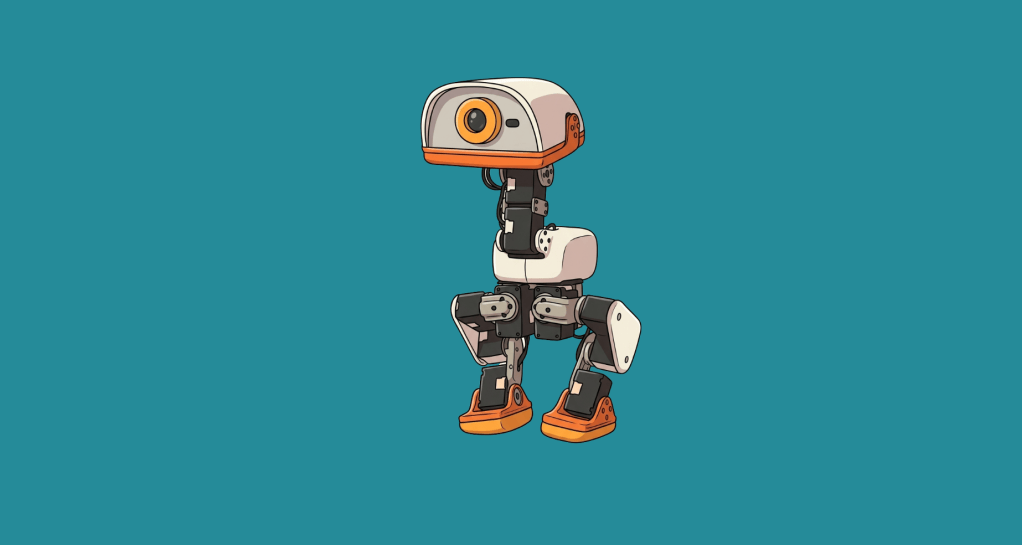
A very quick post to capture some thoughts about last week’s viral MicroDuck launch. Possibly the fastest sales (pre-orders) in consumer robotics and something that has got me wondering.
First, here’s the launch video:
Cute, right? But inside it looks like a very sophisticated setup for a very affordable price. Announced by the open-source AI platform HuggingFace and Pollen Robotics, their partner in France, they reported about $2,500,00 sales in 24 hours (they’re $399 each) and over 10,000 pre-orders in 5 days, they are now backed up for many months. This seems to be partly due to supply chain (they have 15 servomotor actuators, totalling more than the cost of the duck) and partly due to tooling the injection moulders as they move production to SeeedStudio in Shenzhen.
Its capabilities make things like our old Amazon DeepRacer project (now discontinued) look like ancient history. Of course, the chance of getting one in our hands by spring is pretty minimal. Embodied AI and more advanced robotics are now at a level where students could potentially be using them with low barriers to entry. If you can get one.
The timing is interesting too, as chip giant Nvidia have just announced their acquisition of HuggingFace for $12.9bn. This article in Forbes suggests this could be the full ecosystem play for Nvidia, where Nvidia can secure the application layer, as “Hugging Face provides immediate access to thousands of open-source libraries, tools, pre-trained models, as well as a big community of both tool users and developers.” Could MicroDuck be a loss-leader for drawing new users into the ecosystem?
As an open-source platform, lots of things have popped up that you might find interesting.
- Their official MicroDuck simulator lets you play.
- Mishig on HF made this MicroDuck Anatomy interactive tool.
- An explosion of MicroDuck policies and spaces on HF.
Of course, with all the demand and low supply, someone had to have a go at making their own. Here’s a great example, with a full how-to-guide in the second post by yishan:
And these little Ducks are all over my XiaoHongshu (Red Note) feed here in China. After events like the World Humanoid Robot Games the last two years here in Beijing, development from some of the (many) robotics labs here in China and worldwide and now this, you can see why consumer-level robotics would spark the imagination.
We can’t yet get a MicroDuck in hand, but we do have a newly-arrived Reachy Mini, waiting to be assembled*.
All of this got me thinking about what this might mean for robots, children, families and the home. Maybe I’m just a crusty X-ennial, or maybe too much sci-fi has pickled my brain, but I can’t see myself welcoming a humanoid into the home. Is it size, cost and complexity, or is it the uncanny valley?
I wonder now, as advanced robotics are becoming more affordable and accessible, if the real frontier is psychological. How That Robot Made Me Feel, edited by Ericka Johnson and published open-source by MIT is a fascinating collection of essays that “explores what emotions we have when encountering robots, how we react emotionally to them in different contexts, and why these emotional responses are so important”. For a full curation of open-source MIT books on AI and robotics, see here. Also this, this and this are worth a look. Dreaming of Plentitude, in Kai-Fu Lee & Chen Qiufan’s AI2041 explores home robotics too.
We seem to have had little issue in welcoming AI into the home in other ways, even anthropomorphising it: Roombas, lawn robots, Alexa etc. My dad’s mower is called Keith and is treated a bit like a pet. We actually don’t have Alexa, Roomba (or a garden) in our house, and I turn most features of my Apple watch off. But as soon as I saw MicroDuck, I thought “I want one”. Not only because it would be a cool opportunity for students, but because there was something about it that was innately appealing.
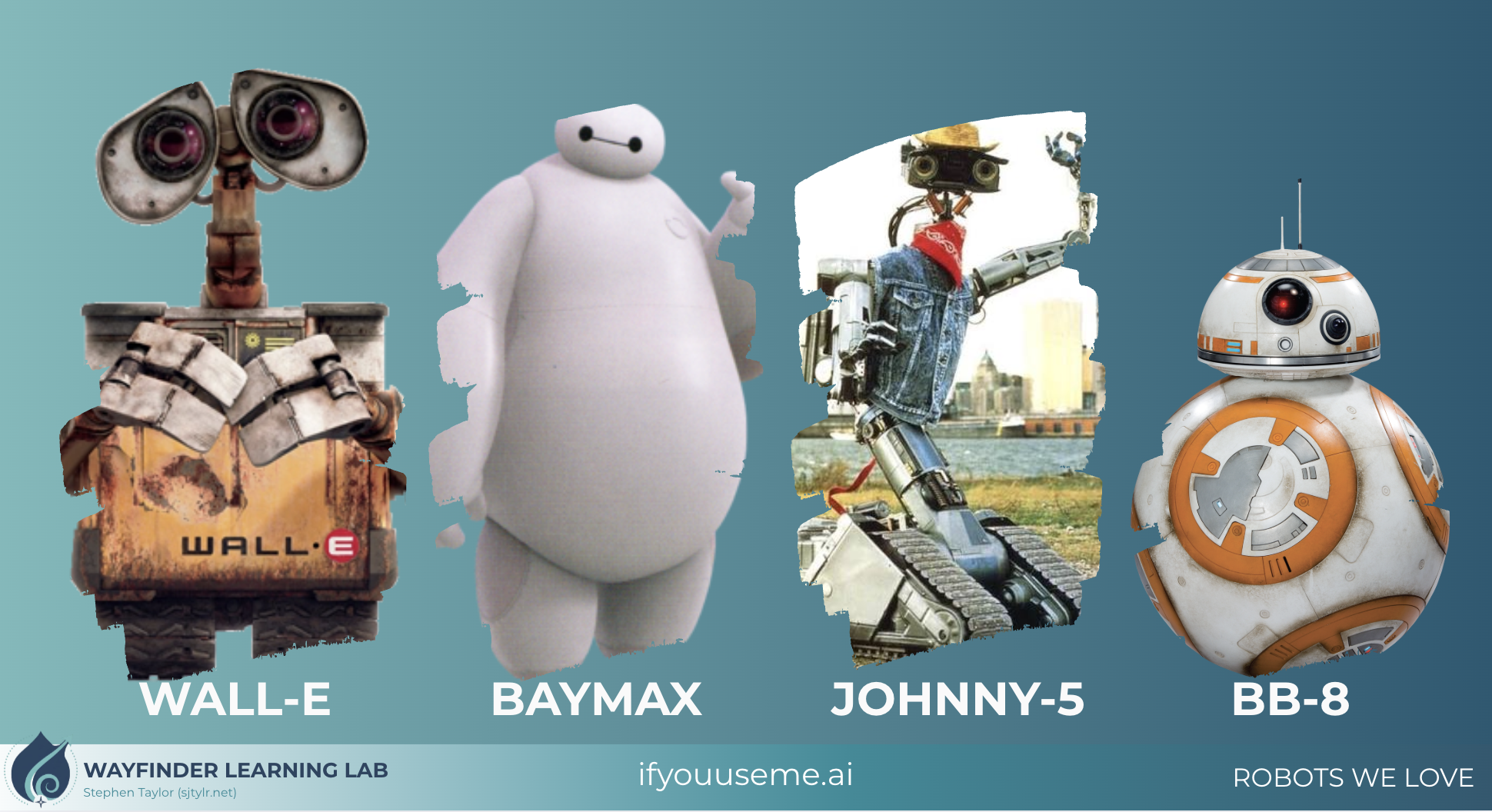
Did the Disneyfied form factor open my mind to inviting all kinds of sensors into the home? Probably. Like many of us, I have a soft spot for Wall-E, Baymax, Johnny-5 and BB-8.
As always, this is a post of more questions than answers. I’m curious to see what happens next in this world of fun-formed advanced robots.
Anyway, if you need a giggle, here’s Pollen Robotics engineer Remi Fabre‘s YouTube channel, with interactions between Reachy and MicroDuck. Can you imagine this happening in your home anytime soon?
*It’s here!



Thank-you for your comments.