This animated gif is part of a recent Buzzfeed post doing the rounds on Facebook: “31 Signs You’re a Third Culture Kid*.”
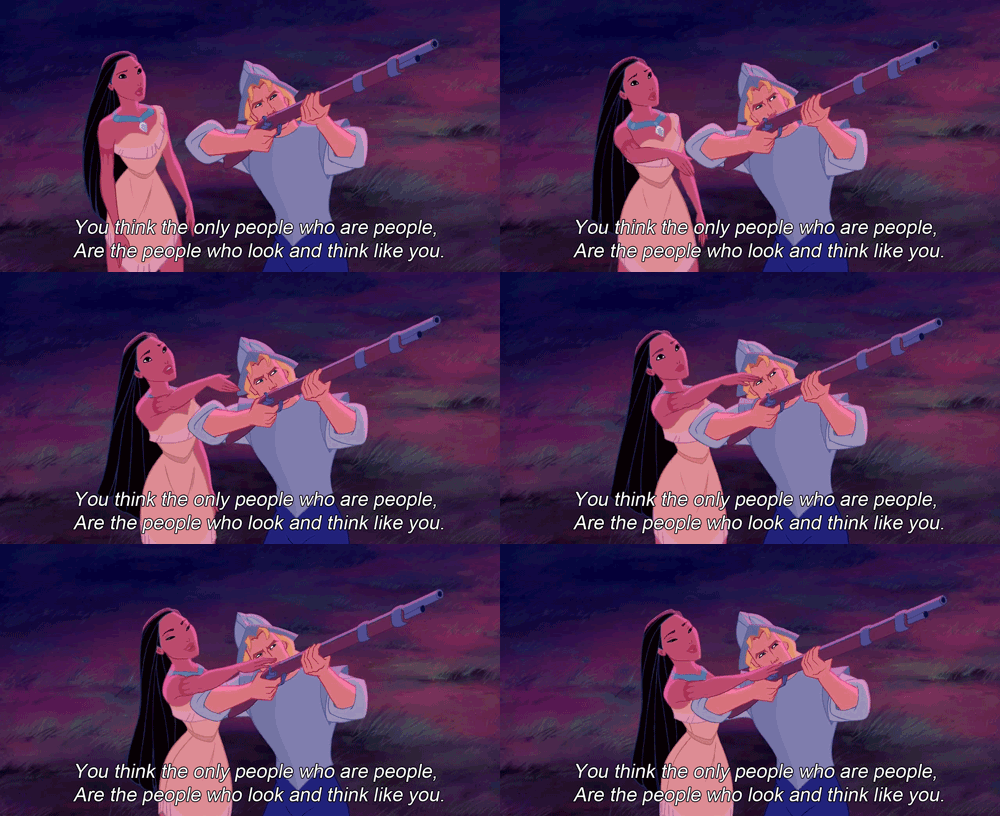
It’s a nice stimulus for thought about what makes our schools different, as well as a neat connection to the IB’s mission statement in that we
“…encourage students across the world to become active, compassionate and lifelong learners who understand that other people, with their differences, can also be right.”
As I think more about what makes an international school ‘international’, I come back to the visible outcomes in terms of student learning, action and attitudes. Are our students becoming more world-minded (or internationally-aware – of other countries and cultures). Does our school promote a deeper set of values of international-mindedness through global citizenship: cultural appreciation and consideration of global issues and an understanding of our interconnectedness and ability to influence change? Do we go beyond the surface of flags, food and festivals and look at what is really going in the world and how our disciplines are connected as part of a global whole?
Over the next year or so – in my MA work and out of interest – I’ll further develop my web chart of the international dimension of a school. The field of international education research is one of real interest: developing, debatable and relevant to our international school contexts (and to my own third/cross-culture kids).

More Reading:
- Education for Global Citizenship: A guide for schools (pdf), from Oxfam
- UNESCO’s education themes and programmes
- Learners Without Borders: A curriculum for global citizenship (pdf), IB Position Paper by Irene Davy
- For a good overview of what makes a school ‘international’, read this page by James Cambridge and Jeff Thompson (with a different pdf by them on classifying international schools here).
……….o0O0o……….
*The Buzzfeed post would be a good homeroom activity for students, or a discussion point in a pastoral care session. How do the students in your class classify themselves? Can they think of any further signs of being Third Culture? Could they represent the signs using different images, music, movie clips or personal anecdotes?
The gif above is a line from the Colours of the Wind song. Again, this could make a great lesson provocation in a citizenship-focused class, or as part of a Ways of Knowing TOK sequence.
“If you walk the footsteps of a stranger, you’ll learn things you never knew you never knew.”


![A Web Chart of the International Dimension of a School [MA Assignment] | i-Biology | Reflections Avatar](https://sjtylr.net/wp-content/uploads/2023/01/cropped-sjtylr_profile.png?w=56)
 Wayfinder Learning Lab - Stephen Taylor
Leave a reply to Stephen Cancel reply