This morning, we ran a 2026 version of “AI, The Future & You” with Grade 9, 10 & 11 students as part of Careers Day. The original lesson was developed in 2023 for Grade 12 students and is on the AI Pedagogy Project site.
The session is short (about 45mins), and includes:
- Tuning-in conversations about enduring skills, careers insights, AI and new pathways.
- A strong emphasis on hope and agency: that by being informed and highlighting their talents and developing skills they can see optimistic futures.
- AI-assisted careers and pathways research.
This time we aimed for all of Grade 9 and 10, with some Grade 11 students, to catch them at an earlier stage and set up a potential series of workshops. We used two tools:
- A Microsoft Form to capture data, which linked to…
- … A FlintAI Activity that used their areas of interest and potential destinations to start their research.
This switch allowed us to get cleaner (anonymous) data in the Form, whilst having visible oversight of the AI interactions. It also minimised pressure on the wifi (over 180 people in one space) and focused the AI conversation on just a few high-quality interactions (reducing the environmental impact), whilst generating useful insights for students. This reasoning was explained to students.
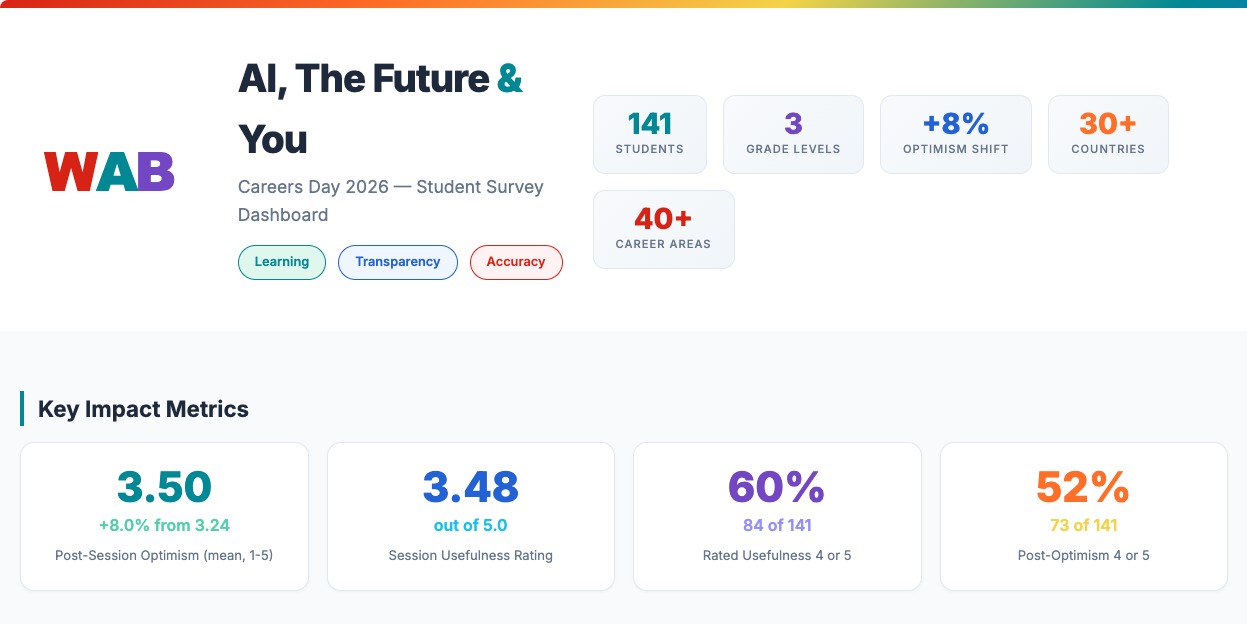
At one point, we had over 180 concurrent Flint sessions running, and finished with 141 total Form submissions. This approach allowed for targeted research insights for each student, and an amazing set of data insights for us, for future planning.
Once the session closed, I took the Form results, checked to make sure it was anonymous and engaged Claude Cowork in developing a detailed brand-aligned research report for teachers and interactive data dashboard for the results, both aligned with our AI Philosophy & Guidance, AI Competencies and MYP-DP AI Clarifications. This was carefully guided and checked thoroughly, but shortened a task that would normally take me many hours (mostly of cutting and pasting) to just an hour.
What did the activity include?
Try the activity using these Poe Bots:
- IB Careers Research Assistant (for students in IB schools)
- AI Career Research Assistant (for any high schooler)
AI will help the students research:
- Research on how AI is influencing their chosen area, including new career pathways, skills and opportunities, as well as some risks.
- Rising technical and enduring skills for their chosen area, including graphics from WEF Future of Jobs 2025.
- Country-specific research on university or other educational pathways, with links and access requirements (of increasing challenge, focused on IB).
The MS Form collected anonymous information on:
- Future optimism ratings before/after activity (increased).
- Career directions and countries of interest.
- Reflection on the critical thinking skills they used and next steps they will take.
- Reflections on how they currently use AI, and what they would like their teachers to know about students and AI.
- Session rating.
After this session, they headed into a day of fascinating Careers Panels with guest speakers from around our community. Organised by our HS Counseling Team, these panels were themed under Professions, Non-Traditional Pathways, Internships & Beyond, Emerging Careers, Career-Switchers and Attitudes in the Workplace, bringing some great perspectives on the many pathways that can open up for our students.
Reflection
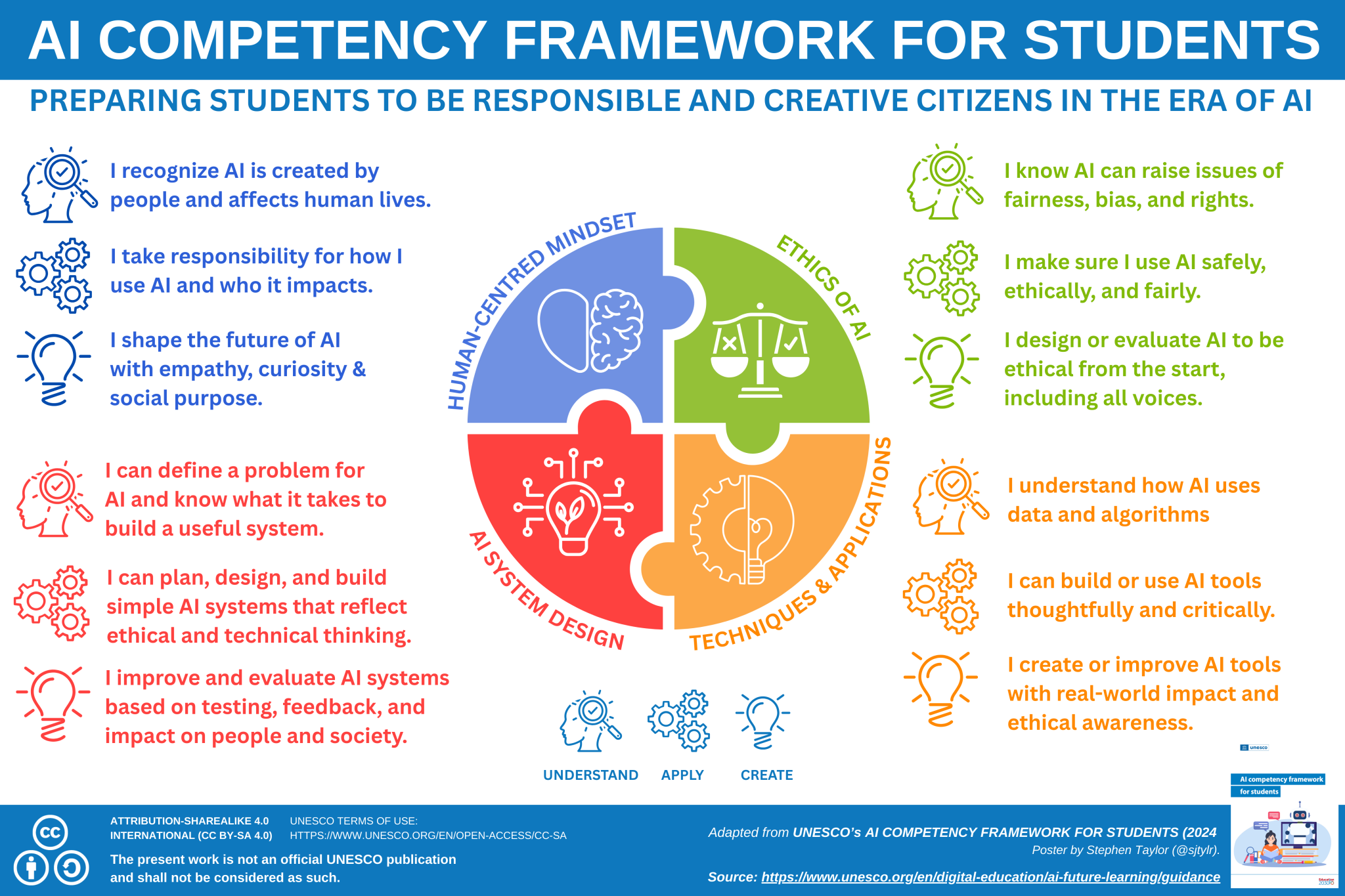
The session and reports were well received by students, worked (thankfully) and generated loads of really useful data for us, particularly for supporting our Grade 9 and 10 students before they make subject choices. Students were thoughtful in their responses, and some came up for after-party chats on AI, skills and the environmental impacts of AI. All of these are great fuel or future workshops. Students can save their findings, and use them as a launch-pad for their own research and skills development as they work towards building portfolios. We will use this rich learning to help shape more experiences and skill development for our students. This was a ton of work to set up and make sure it was functioning correctly, but now it’s dialed in and well worth the effort. It aligns well with our own AI competencies, as well as the competencies and literacies from UNESCO and OECD.
Edit: How is AI Being Used in the Workforce?
In the week since this post, Anthropic AI’s Economic Research team released a really interesting report. It takes an extensive look at how labour markets might be impacted by AI, including current evidence based on their research. One of the most eye-opening parts of the report is the graphic below, which shows what they think AI is capable of (in blue) and what it is currently being used for (in red). The scale is the share of the job that AI is capable of under current conditions (so 1.0 = total potential replacement). Where the blue might be alarming, the gap between blue and red suggests a lot of potential for those who can learn to adapt and make use of these technologies in the next few years.
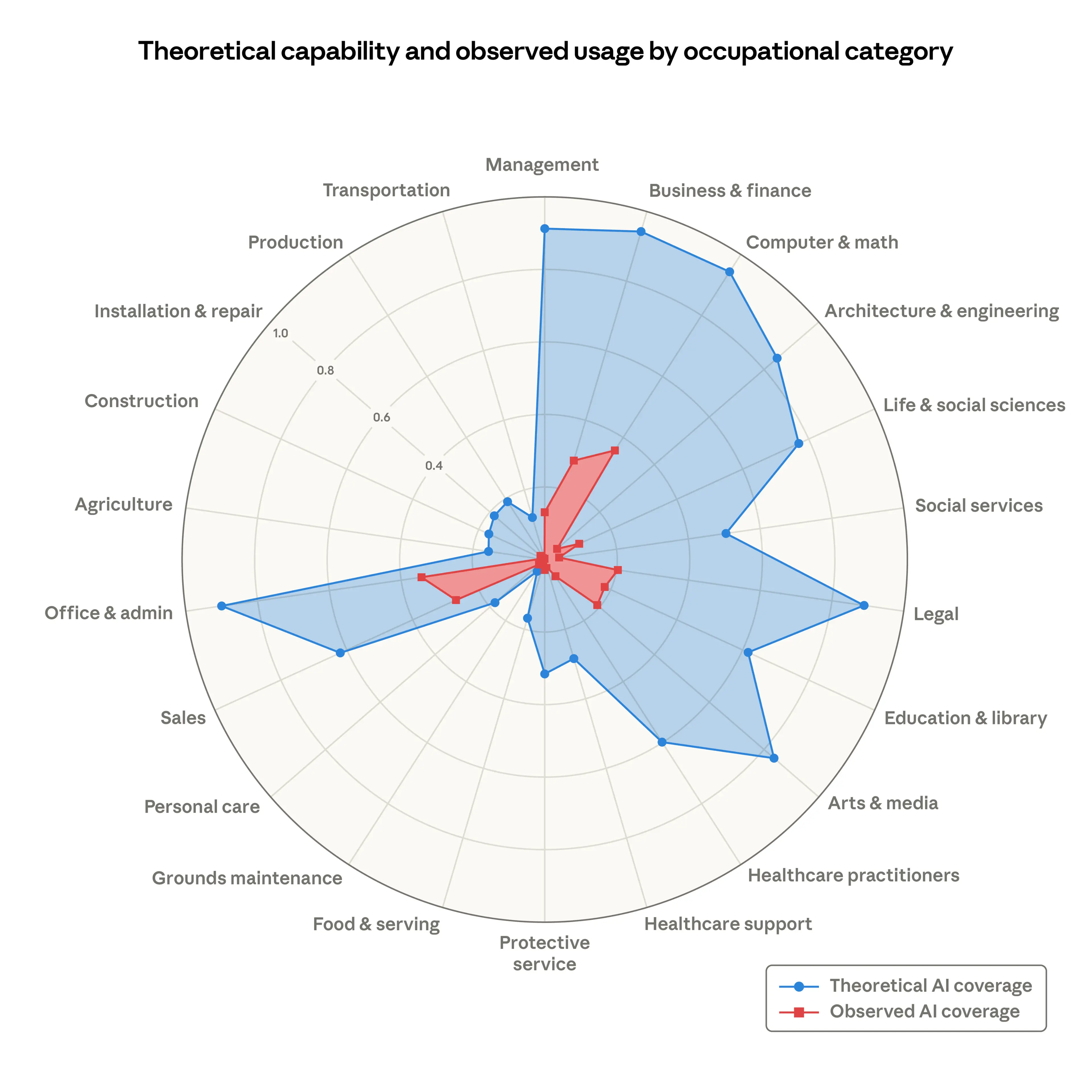
Read the full paper to find out more about their methodology and the career areas they think are most and least “exposed” in the current waves of frontier AI.
Resources
The Data Dashboard & Report
These works in progress are super useful, with so much more data still to analyse from the raw Form. The pdf report was 24 pages with insights, analysis, graphics and connections to our documentation. The html data dashboard scrolls way down and gives some really useful insights for tuning-in sessions.
Here’s the starter prompt I used in Claude Cowork:
“I have just completed a workshop with Grade 9, 10 and 11 students on “AI, The Future & You”, in which we discussed growing future skills and used AI to research future pathways and careers options. The workshop generated a huge amount of data in the form of a survey. I need your help to turn this into a powerful interactive dashboard and beautiful pdf report that can be used by the school to inform teaching, learning, planning and careers guidance.
The spreadsheet results are attached. You need to process these data very carefully, and make sure you fully understand. Then you need to process the data into the form of the dashboard and report. Ask me any clarifying questions you need along the way. Make sure people’s names are not included in the report: I have anonymised, but double-check just in case.
Using the data, make sure the report and dashboard are visually appealing, clearly communicated and useful. Use quantiative analysis and data presentation where possible (such as optimism ratings before and after), and create some visualisations of key narrative data. Present visuals that show where students want to go and what careers they are thinking about. In the “Paste response here” question, this is a synthesis of the students’ AI research – it is packed with narrative data and research.
Where there are narrative responses to questions, use qualitative content analysis and thematic analysis to cluster, analyse, synthesise and summarise the findings. Use multiple illustrative quotes to support the claims and presentation of the data.
Finish with a clear and actionable set of recommendations for the school as we try to support these learners better with learning, AI, pathways and future careers research.”
During the interactions with Claude, I added the sheets, our documentation, branding guidelines and gave (lots of) feedback on the outputs: mostly to make it clearer and get more student quotes included.
Environmental Impacts
Using the AI Environmental Impacts Estimator, I estimated the following uses of AI, estimating upwards.
Student use was low per-person (2-3 requests), but to be safe, I estimated:
- 3×187=561 simple text queries.
- 2×187=374 deep research queries (the prompt was large, but the results actually more like search than deep research).
For the analysis, I estimated up, but using Claude Cowork:
- 10 coding sessions
- 24 data analysis (12 columns twice)
No images, video or audio were generated specifically for this workshop – we used existing assets.
This gives:
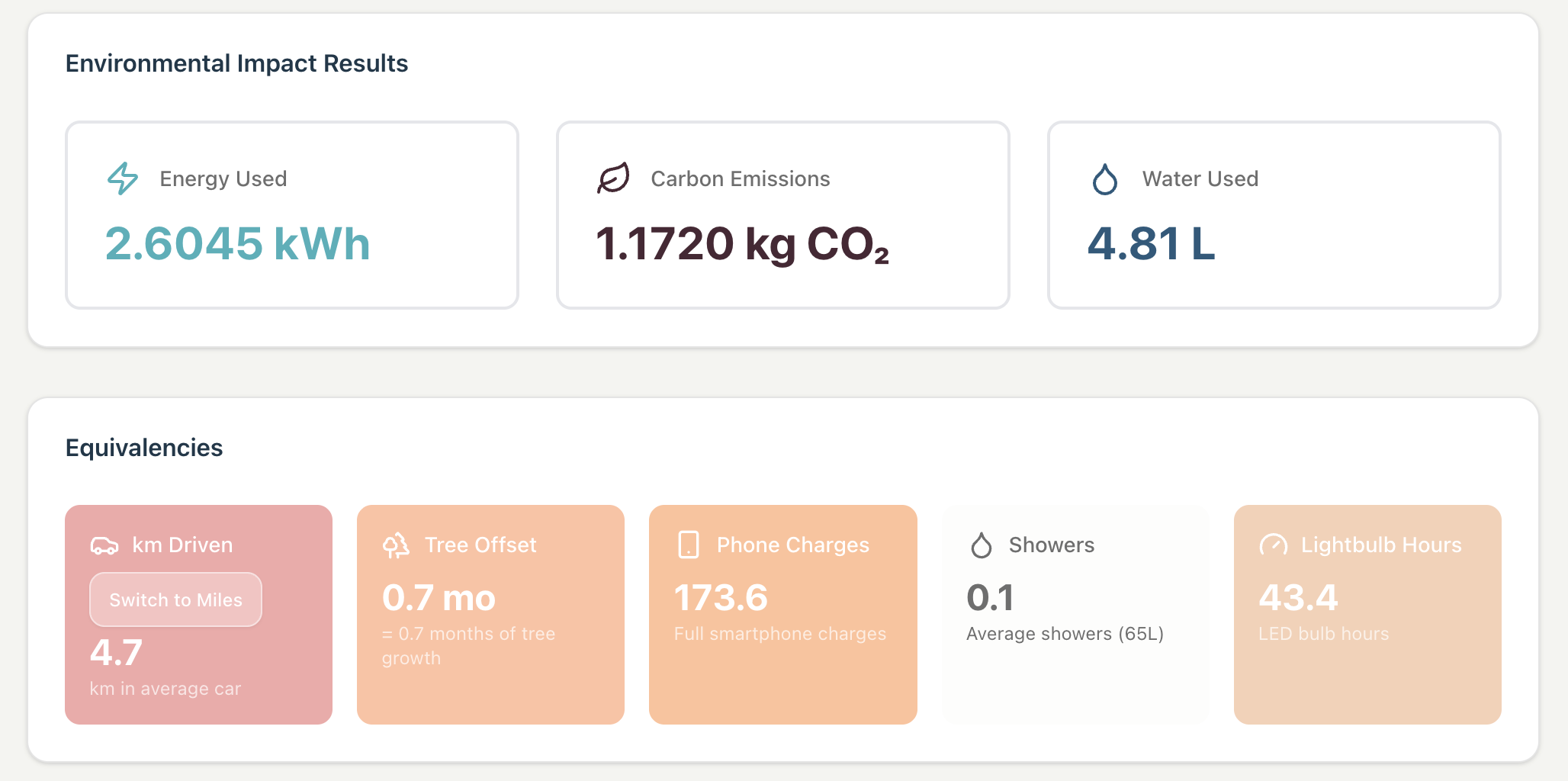
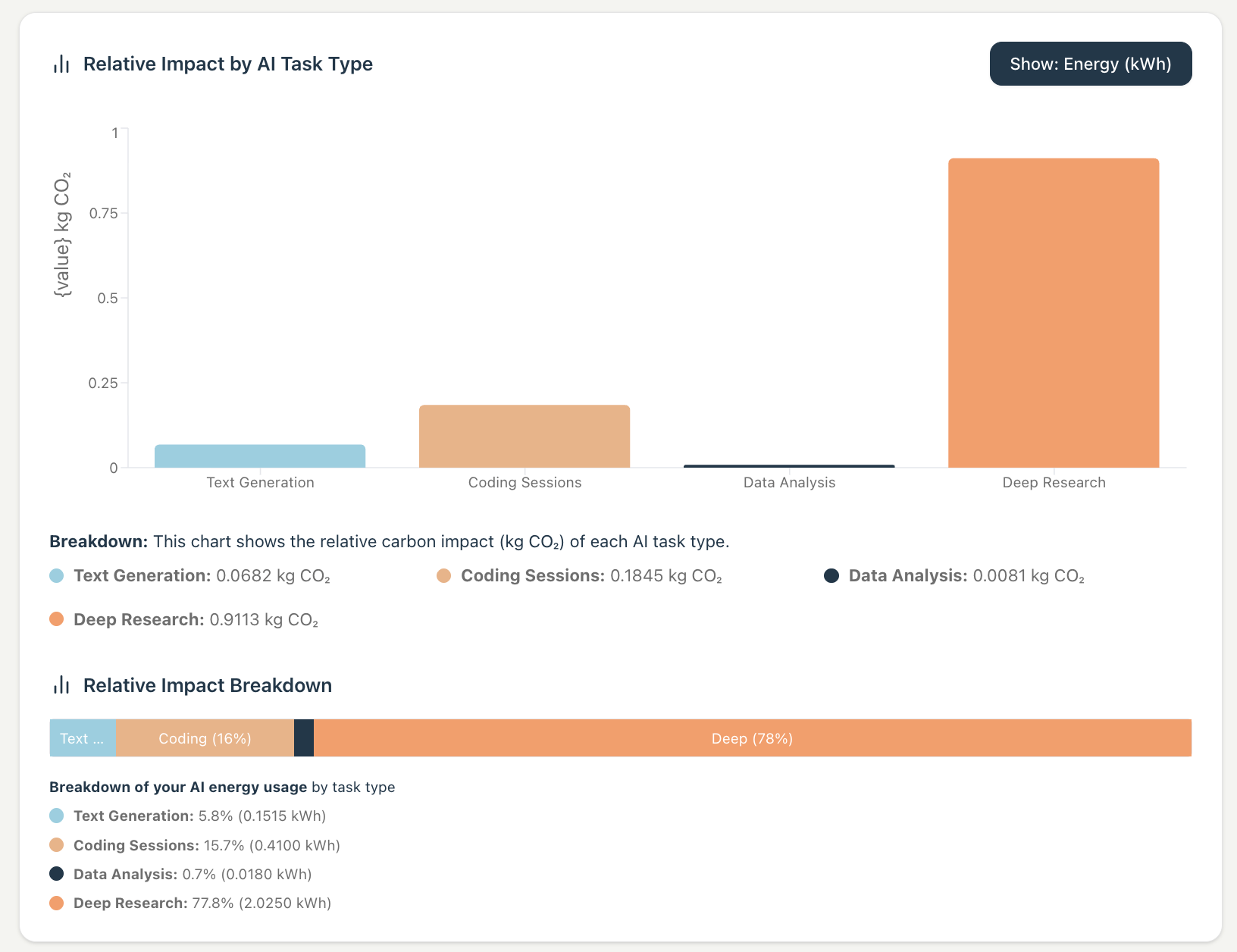
Overall, a noticeable, but not unreasonable impact, considering the value of the outputs. By removing extraneous use (images, video etc) and minimising interactions with AI, we were able to get valuable information in the hands of over 180 students in just 25 mins of laptop usage. For them to get the levels of detail and same number of resources each by themselves would take a long time and a lot of internet searching and computer use.
At the end of the session, we debriefed on how we can use AI responsibly and effectively to try to focus on essential, not superfluous, tasks.
Workshop Mix: The Buoyant Force
A workshop about hope needs a soundtrack of bangers.


 Wayfinder Learning Lab - Stephen Taylor
Thank-you for your comments.